

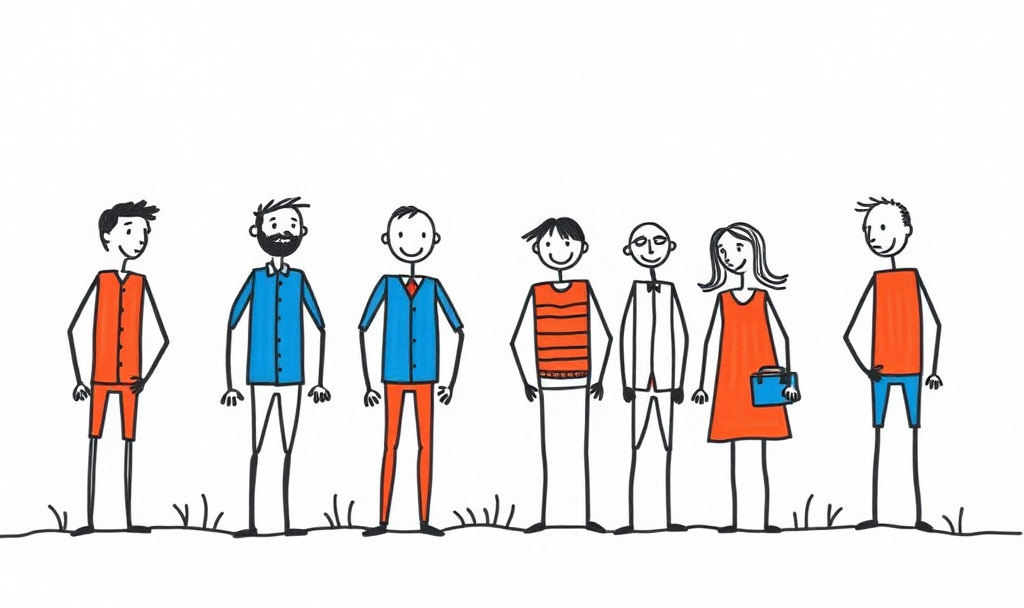
Who here believe in the good ol’ “midlife crisis” phenomenon? The reality behind this milestone—the midlife milestone—is often misunderstood as crisis-driven instead of embracing the seeds that’s been sown throughout our lives. By the time we’ve reached our 40s and 50s, we have (or should have) established careers for ourselves, healthy relationships with longevity, and reliable coping mechanisms that no longer keep us in temporary adaptations, woven into identity. However, not everything goes as planned.
Unlike earlier stages, midlife introduces heightened self-awareness and other defining changes. For example, these changes can include physiological appearances and experiences, aging parents, shifting family roles, and increased awareness of mortality—aka, when you die. Because of these changes, we tend to create psychological pressure. The pressure we create for ourselves longer feels abstract, but visible—like awakening your third eye and accepting that awareness alone can trigger unresolved trauma.
Trauma during this midlife stage can frequently resurface through reevaluation. Individuals may question long-held decisions, career paths, or relational patterns. People may also feel regret, grief, or disillusionment when things don’t go their way or when emotional suppression becomes harder to maintain. After decades of endurance, the nervous system may no longer tolerate chronic overextension.
Two common trajectories appear in this stage: rigidity or recalibration.
Rigidity presents as emotional hardening, defensiveness, or resistance to change. Long-standing coping mechanisms become more entrenched or refined. Individuals may double down on control, withdraw from vulnerability, or dismiss emotional conversations altogether.
Recalibration, however, reflects an alternative response. Some individuals begin examining inherited beliefs, attachment patterns, and stress responses with new honesty. Therapy, spiritual inquiry, boundary-setting, or relational repair often emerge during this time. Rather than asking, “How do I maintain what I’ve built?” the question, then, becomes, “Is what I’ve built aligned with who I am becoming?”
Midlife does not automatically produce transformation. It produces clarity. What individuals choose to do with that clarity determines whether trauma continues to calcify or to integrate in their lives.
Author’s Note
Hello everyone and thank you so much for being part of Hari’s Helping Hands! I hope this post serves y’all well. So today’s the last day of March and I’m looking forward to not being washed away by the April showers.
Anyway, if this post helped y’all out greatly, please hit that subscribe button and share your journey with me. I’m not sure if I told y’all this already, but I have walked away from my job and into something more fulfilling. I think it’s time for me to shift gears and careers and be that psychologist I’ve always wanted to be.
I am aware my road is going to be a long one—nights where I don’t want to do anything but sit and cry. However, I see myself knocking out all that I need to knock out so I can get where I need to be. Actually, speaking of knocking out things:
After April 3rd, 2026, I’ll be taking a little break. I’m not sure how long this break will be, but it’ll be a little while before I come back. It’s been a pleasure working with y’all and commenting on y’alls stuff while living here on Substack. While I cannot fully predict the future, I know this is something that I need to do.
Man, usually people would teach us to take that break and don’t worry about filling everyone in on the details. However, that’s not how I roll. I like to share details with y’all, even if it’s small and insignificant. Plus, y’all are enjoying my work for free, so for sure you’re not missing out at all.
If it’s not too much on y’alls end, don’t forget to show some love to my Ko-fi page. Your help and wisdom pushes me closer to creating Hari’s Helping Hands as a legitimate nonprofit in the state of Texas (yes, that’s where I live BTW). I’ll also have to do more homework and see about collabs and potential applications for board members when creating the nonprofit.
Ah, so much to do, but I won’t stress over this right now. When it happens, it’ll happen. Thank y’all again for being part of this journey and remember that y’all are loved and appreciated. I’m not walking away forever, just giving us time to breathe so the dust can settle. I love you and thank you for being part of this journey with me. I’ll see y’all in July or August 2026.
